# Exploring Drive-In and Drive-Thru Pallet Racks: Innovative Solutions for Warehouse Storage
In today’s fast-paced logistics and warehousing environment, efficient use of space combined with quick accessibility to inventory is paramount. Among the various storage solutions available, **drive-in** and **drive-thru pallet racks** have emerged as popular and highly effective systems for maximizing storage density and operational efficiency. This article delves into the key aspects of drive-in and drive-thru pallet racking systems, their design principles, benefits, use cases, and considerations for implementation.
---
## Understanding Drive-In and Drive-Thru Pallet Racks
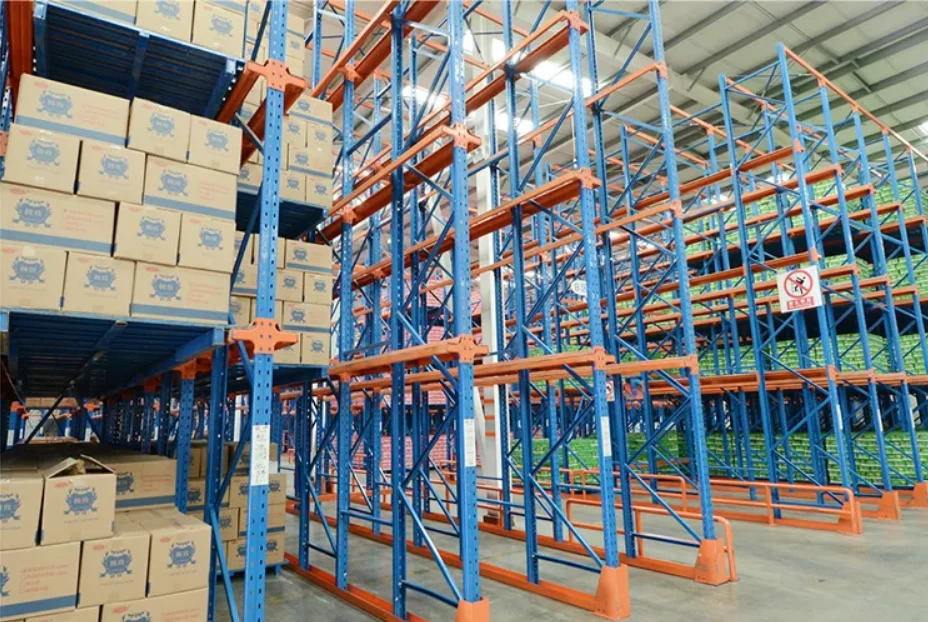
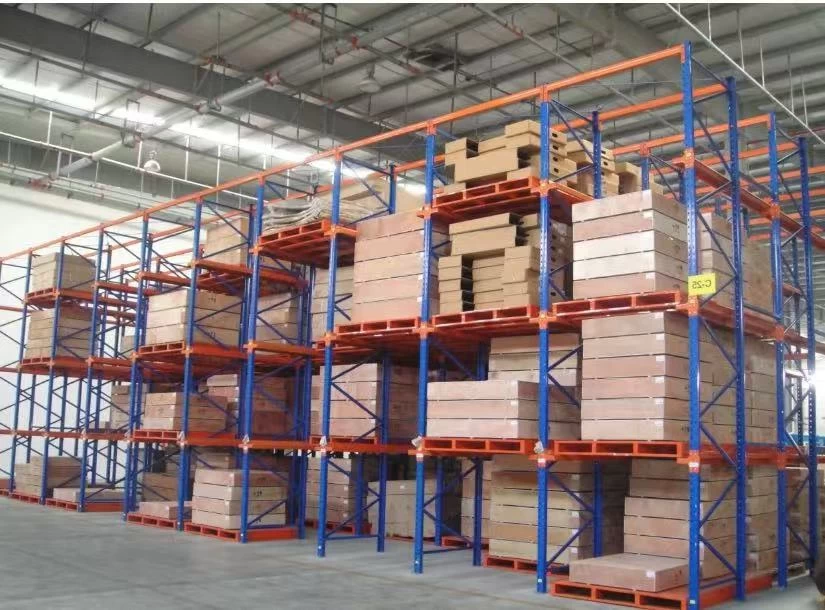
Drive-in and drive-thru pallet racks are types of high-density storage systems designed to store large quantities of similar products or pallets. Unlike selective pallet racking, which provides individual access to each pallet, these systems enable forklifts to drive directly into the storage lanes for loading and unloading.
### Drive-In Pallet Rack
Drive-in racks feature a single entry point per lane. Forklifts enter one side of the system, load pallets deep inside the rack structure, and exit through the same side. This configuration follows a **Last-In-First-Out (LIFO)** inventory model, meaning the last pallet stored will be the first to be retrieved.
### Drive-Thru Pallet Rack
Drive-thru racks have openings on both sides of the storage lanes, enabling forklifts to enter from either end and exit from the opposite side. This design supports a **First-In-First-Out (FIFO)** inventory flow, making it ideal for products with expiration dates or rotation needs.
---
## Key Components and Structural Design
Both drive-in and drive-thru racks consist of several critical components engineered for safety and functionality:
- **Load Beams:** Horizontal supports that hold the pallets.
- **Uprights:** Vertical frames that support the beams and withstand heavy loads.
- **Rail Guides:** Protect uprights and guide forklift entry.
- **Support Bars/Bracings:** Provide structural stability.
- **Backstop Bars:** Prevent pallets from sliding out the back (especially for drive-in racks).
Their design must adhere to strict engineering standards to ensure they can safely bear the weight of multiple pallets stacked deep into the system.
---
## Benefits of Drive-In and Drive-Thru Pallet Racking
### 1. Maximized Storage Density
One of the most significant advantages of drive-in/drive-thru racks is their ability to maximize cubic space usage. By reducing the number of aisles needed between rows, warehouses can greatly increase pallet storage capacity per square foot.
### 2. Cost Efficiency
With higher density comes lower cost per pallet position. Businesses can delay costly warehouse expansions by optimizing current facility space. Additionally, fewer aisles mean less floor space dedicated to forklift movement.
### 3. Streamlined Inventory Management
Drive-thru racks support FIFO inventory management, critical for industries like food and beverage or pharmaceuticals where product rotation is essential. Drive-in racks, with LIFO flow, suit non-perishable or bulk-storage applications.
### 4. Improved Safety and Accessibility
Modern drive-in/drive-thru racking systems incorporate safety features such as reinforced uprights, rail guards, and clear aisle markings. These reduce forklift damage risks and enhance operator confidence during loading/unloading.
---
## Use Cases and Industry Applications
Drive-in and drive-thru pallet racks are widely used in industries where storage density and efficient inventory turnover are priorities:
- **Food and Beverage:** For storing boxed goods, canned products, or beverages requiring FIFO rotation.
- **Cold Storage:** Maximizing limited refrigerated space with dense storage.
- **Manufacturing:** Bulk storage of raw materials or finished goods.
- **Retail Distribution Centers:** Storing high volumes of similar SKUs or seasonal items.
- **Automotive:** Housing spare parts or components efficiently.
---
## Implementation Considerations
Before installing a drive-in or drive-thru pallet racking system, consider the following factors:
### Warehouse Layout and Space Constraints
Assess aisle widths, ceiling height, and square footage. Drive-in systems require sufficient depth to accommodate multiple pallets per lane; drive-thru racks need through-lane clearance.
### Inventory Characteristics
Evaluate SKU variety, pallet turnover rate, and shelf life. Products needing strict FIFO should lean toward drive-thru systems.
### Forklift Type and Maneuverability
Ensure forklifts can safely navigate rack lanes. Reach trucks or narrow-aisle forklifts may be necessary depending on rack dimensions.
### Load Weight and Frequency
Structural design must support maximum pallet weights and anticipated handling frequency to prevent rack fatigue or failure.
### Safety Standards and Regulations
Compliance with OSHA guidelines and local building codes is mandatory. Regular inspections and maintenance schedules are essential for longevity.
---
## Integrating Modern Technologies
To further enhance drive-in and drive-thru systems, many warehouses integrate advanced technologies:
- **Warehouse Management Systems (WMS):** Software solutions track inventory location and movement within dense racks.
- **RFID and Barcode Scanning:** Facilitate quick identification and data capture during loading/unloading.
- **Automated Guided Vehicles (AGVs):** Emerging automation that can operate within narrow aisles to increase efficiency and safety.
---
## Conclusion
Drive-in and drive-thru pallet racks represent a strategic investment for warehouses aiming to optimize storage density without compromising accessibility or safety. By understanding their design principles, operational benefits, and implementation requirements, businesses can tailor these systems to their unique inventory needs, ultimately driving productivity and cost savings.
Whether you are managing a cold storage facility with strict FIFO needs or a manufacturing warehouse seeking high-density bulk storage, exploring drive-in and drive-thru pallet racking can unlock significant value. When coupled with modern warehouse management technologies and best practices, these storage solutions become powerful tools in the arsenal of efficient warehouse operations.
---
### Additional Notes on Styling and Presentation
While this article focuses on the technical and operational aspects, effective communication in digital formats often leverages **CSS properties** for readability and engagement. For example, setting:
- `box-sizing: border-box;` ensures padding and borders are included in element width calculations, maintaining layout consistency.
- Using web-safe fonts like `"Arial, Helvetica, sans-serif"` improves cross-platform readability.
- Applying `margin: auto;` and `max-width` helps center content and control text width for optimized reading experience.
- Backgrounds with subtle `linear-gradient` and `rgba` color overlays can add visual depth without distracting.
- Utilizing `box-shadow` and controlled `overflow` enhances aesthetic appeal and content containment.
Incorporating these design elements aligns the presentation of technical content with professional standards, ensuring the information is both accessible and engaging.
---
**Keywords:** box-sizing, border-box, margin, background, font-family, Arial, Helvetica, sans-serif, color, width, padding, max-width, auto margin, box-shadow, overflow, position, min-height, linear-gradient, rgba colors, base64 image data, font.
---
*For further insights on optimizing warehouse storage systems or consulting on pallet rack design, feel free to reach out or explore our related resources.*