# Understanding Drive-In vs. Drive-Thru Pallet Racks: Key Differences and Benefits
In the realm of warehouse storage solutions, optimizing space while maintaining accessibility is crucial for operational efficiency. Among various storage systems, pallet racking plays a pivotal role in organizing inventory and streamlining material handling processes. Two popular types of high-density pallet racks are **Drive-In** and **Drive-Thru** pallet racks. Though they may seem similar at first glance, these systems differ significantly in design, application, and benefits.
This article dives deeply into understanding the key differences and benefits of Drive-In versus Drive-Thru pallet racks. Whether you’re a warehouse manager, logistics professional, or a supply chain consultant, gaining clarity on these storage systems can help you make informed decisions tailored to your facility’s needs.
---
## Overview of Pallet Racking Systems
Pallet racks are modular storage structures designed to hold pallets (standardized wooden or plastic platforms) loaded with goods. They enable vertical stacking of pallets, maximizing floor space utilization and facilitating easier access for forklifts and other material handling equipment.
High-density racking systems like Drive-In and Drive-Thru racks offer storage capacity advantages by reducing the number of aisles required between pallet positions. However, this comes at the expense of some accessibility flexibility compared to selective racking systems.
---
## What Are Drive-In Pallet Racks?
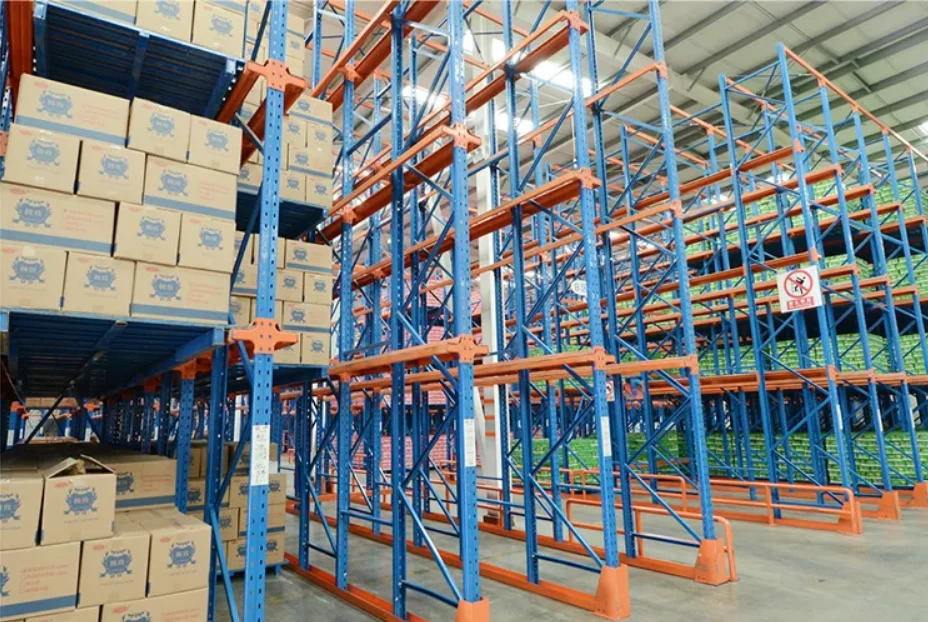
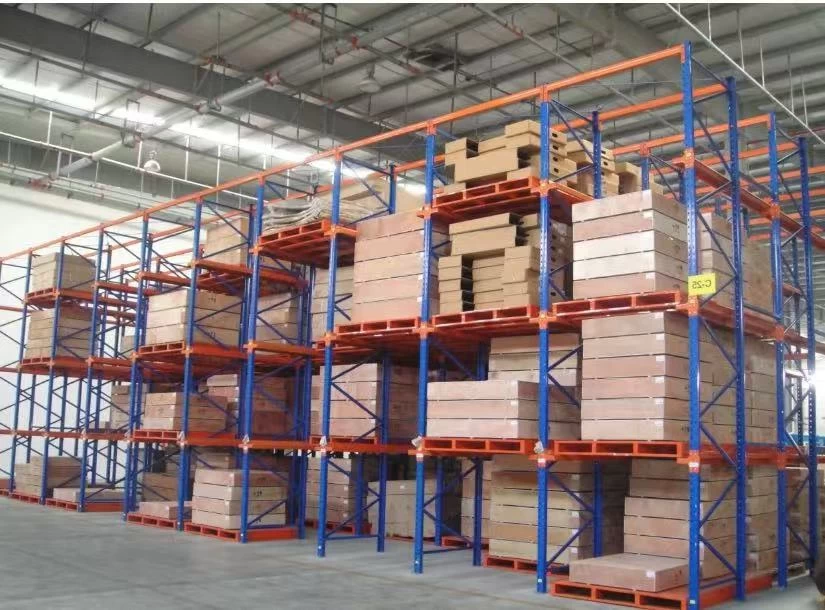
Drive-In pallet racks are designed to allow forklifts to enter the rack structure itself to load and unload pallets. The system consists of a series of columns and horizontal rails forming several lanes or “channels.” Pallets are stored multiple positions deep within each channel.
### Key Features of Drive-In Pallet Racks:
- **Single Entry/Exit Point:** Forklift access is available only from one side of the rack.
- **Last-In, First-Out (LIFO) Inventory Flow:** Because pallets are loaded and retrieved from the same side, the last pallet stored is the first one accessible.
- **High Storage Density:** Pallets are stored close together, minimizing the need for multiple aisles.
- **Deep Lane Storage:** Typically, lanes can be 5 to 10 pallets deep or more.
- **Cost-Effective Construction:** Fewer aisle spaces reduce overall building footprint requirements.
---
## What Are Drive-Thru Pallet Racks?
Drive-Thru pallet racks share many structural similarities with Drive-In racks but differ primarily in forklift access points.
### Key Features of Drive-Thru Pallet Racks:
- **Dual Entry/Exit Points:** Forklifts can access both ends of the rack channel.
- **First-In, First-Out (FIFO) Inventory Flow:** Pallets are loaded from one side and retrieved from the opposite side, enabling better inventory rotation.
- **High-Density Storage:** Like Drive-In racks, Drive-Thru racks reduce aisle space requirements.
- **Improved Operational Flexibility:** Dual access points provide greater flexibility in loading/unloading operations.
---
## Detailed Comparison: Drive-In vs. Drive-Thru Pallet Racks
| Aspect | Drive-In Pallet Racks | Drive-Thru Pallet Racks |
|-----------------------------|-----------------------------------------------------|------------------------------------------------------|
| **Forklift Access** | Single side entry and exit | Entry and exit from both sides |
| **Inventory Management** | LIFO (Last In, First Out) | FIFO (First In, First Out) |
| **Storage Density** | Very high - fewer aisles needed | Very high - slightly lower than Drive-In |
| **Operational Flexibility** | Less flexible due to single access point | More flexible for loading and unloading |
| **Ideal Use Cases** | Non-perishable goods, bulk storage | Perishable goods, items requiring strict FIFO |
| **Cost Considerations** | Lower initial investment due to simpler design | Slightly higher costs due to double entry points |
| **Safety Considerations** | Higher risk as forklift operates inside rack lanes | Safer since forklifts can pass through rack channels |
| **Maintenance Complexity** | Simpler maintenance | Slightly complex due to additional access points |
---
## Benefits of Drive-In Pallet Racks
### 1. Maximized Storage Space
Drive-In racks excel at maximizing storage density. By eliminating multiple aisles, warehouses can store more pallets per square foot compared to traditional selective racking.
### 2. Cost Efficiency
With fewer aisles and simpler construction, Drive-In racks often require a smaller capital investment and reduce building space costs.
### 3. Suitable for Homogeneous Products
If your warehouse stores large volumes of the same SKU or product type that do not require frequent rotation, Drive-In is highly effective.
### 4. Simplified Warehouse Layout
The straightforward configuration makes planning and managing warehouse layouts easier for bulk inventory.
---
## Benefits of Drive-Thru Pallet Racks
### 1. FIFO Inventory Management
Drive-Thru racks support FIFO inventory flow, essential for industries dealing with perishable goods or products with expiration dates.
### 2. Improved Accessibility
Dual access points reduce forklift congestion and improve material movement. This also enhances safety by minimizing the need for forklifts to back out of lanes.
### 3. Flexibility in Operations
Warehouses handling multiple SKUs or products that require frequent rotation benefit from the operational flexibility offered by Drive-Thru racks.
### 4. Balanced Storage Density and Accessibility
While slightly less dense than Drive-In racks, Drive-Thru racks still optimize storage space better than selective racking.
---
## Factors to Consider When Choosing Between Drive-In and Drive-Thru Pallet Racks
### 1. Inventory Type and Turnover Rate
- Use **Drive-In racks** for bulk storage of non-perishable items with low turnover.
- Use **Drive-Thru racks** for products with shelf life concerns or those requiring FIFO management.
### 2. Available Warehouse Space
- Drive-In racks maximize space when the warehouse layout limits multiple access aisles.
- Drive-Thru racks require aisle space on both ends but still reduce the number compared to selective racks.
### 3. Budget Constraints
- Drive-In racks typically have lower upfront costs.
- Drive-Thru racks involve more complex installation and slightly higher costs.
### 4. Safety and Forklift Operation
- Operating forklifts inside Drive-In lanes demands careful training and adherence to safety protocols.
- Drive-Thru racks provide safer passageways and reduce collision risks.
---
## Integration with Warehouse Management Systems (WMS)
Modern warehouses increasingly rely on Warehouse Management Systems to optimize storage and retrieval. Both Drive-In and Drive-Thru pallet racks can be integrated with WMS to track inventory locations, monitor stock rotation, and manage replenishment schedules effectively.
Implementing barcoding, RFID, or other automated identification technologies further improves accuracy and reduces errors inherent in high-density storage configurations.
---
## Maintenance and Safety Best Practices
Regardless of which system you choose, maintaining pallet racks is critical to ensure longevity and safety.
- **Regular Inspections:** Check beams, uprights, and connectors for damage or wear.
- **Load Limits:** Adhere strictly to specified weight capacities.
- **Forklift Training:** Operators must be trained to navigate confined spaces safely.
- **Protective Measures:** Install column guards or protective barriers to minimize impact damage.
- **Cleanliness:** Keep aisles and lanes clear of debris to prevent accidents.
---
## Conclusion
Choosing between Drive-In and Drive-Thru pallet racks hinges largely on your warehouse’s inventory characteristics, operational priorities, and physical constraints.
- **Drive-In pallet racks** offer superior storage density and cost efficiency but require acceptance of LIFO inventory management and careful forklift operation within rack lanes.
- **Drive-Thru pallet racks** provide the advantage of FIFO inventory flow and operational flexibility with dual access points, making them ideal for perishable or fast-moving products.
By thoroughly evaluating your warehouse workflows, product types, and safety considerations, you can select the most appropriate pallet rack system to enhance space utilization and streamline your supply chain operations.
---
## Additional Resources
For readers interested in exploring more about warehouse storage optimization, consider reviewing resources on:
- Selective vs. push-back pallet racks
- Automated storage and retrieval systems (AS/RS)
- Warehouse layout design and optimization software
---
**Keywords:** box-sizing, border-box, sde-body, margin, background, font-family, Arial, Helvetica, sans-serif, color, sde-detail, width, padding, sde-page, max-width, auto margin, box-shadow, overflow, sde-hero, position, min-height, linear-gradient, rgba colors, base64 image data, font
---
By understanding the nuances between Drive-In and Drive-Thru pallet racks, warehouse professionals can implement smarter storage solutions that balance density, accessibility, and safety—ultimately driving operational excellence.