# How Drive-In and Drive-Thru Pallet Racks Optimize Warehouse Storage
Efficient warehouse storage is a critical component of modern supply chain management. As businesses seek to maximize storage capacity, reduce operational costs, and improve order fulfillment speed, innovative storage solutions have become vital. Among these, **drive-in** and **drive-thru pallet racking systems** stand out as highly effective methods for optimizing warehouse storage space.
This comprehensive article explores how drive-in and drive-thru pallet racks can transform warehouse operations by increasing storage density, improving inventory management, and enhancing workflow efficiency. We will delve into their design principles, operational benefits, ideal use cases, and considerations for implementation, providing warehouse managers and logistics professionals with actionable insights to leverage these systems effectively.
---
## Understanding Drive-In and Drive-Thru Pallet Racks
Before diving into optimization benefits, it’s essential to understand what drive-in and drive-thru pallet racks are and how they differ from traditional pallet racking systems.
### What Are Drive-In Pallet Racks?
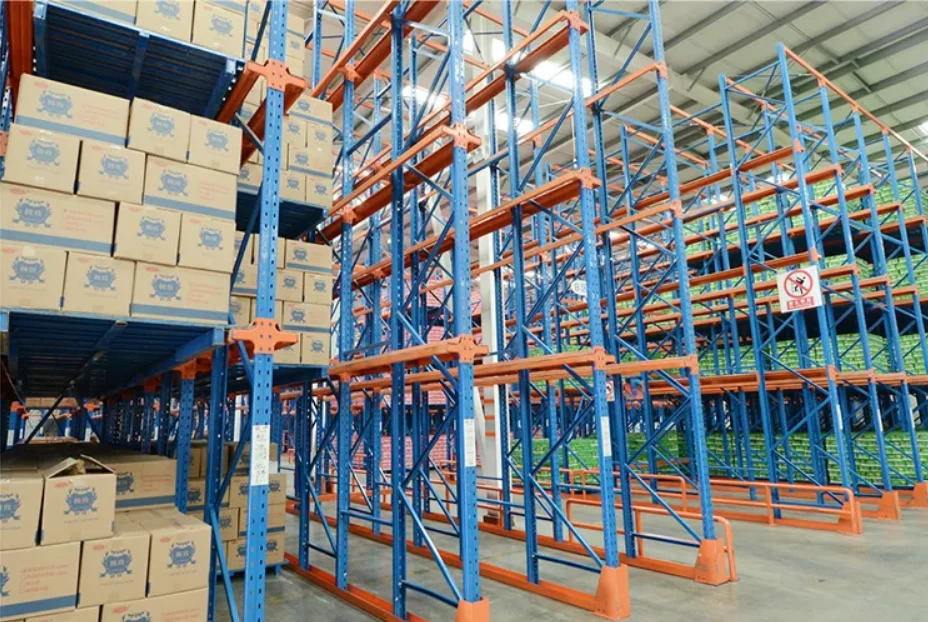
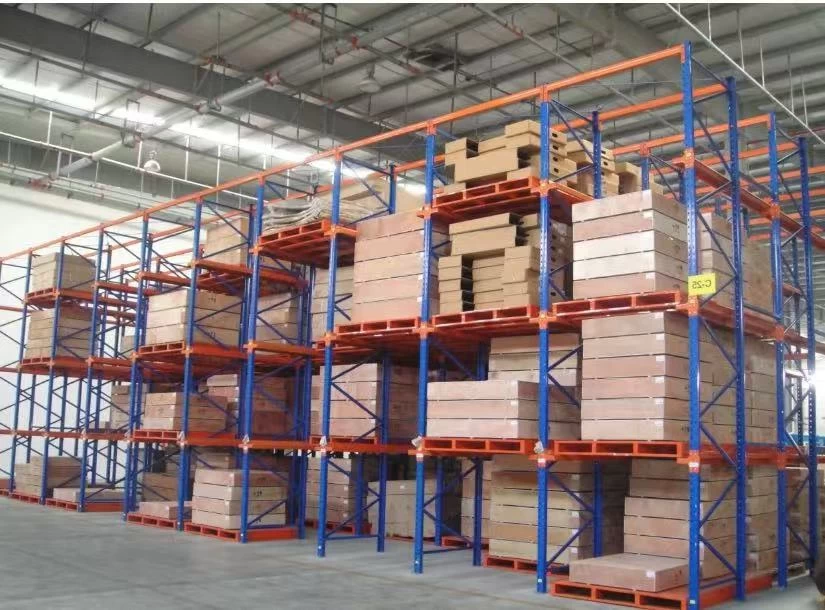
Drive-in pallet racks are designed to allow forklifts to drive directly into the rack structure to store or retrieve pallets. This system features deep lanes where pallets are stored multiple positions deep on rails or supports, typically in a Last-In-First-Out (LIFO) configuration. Because forklifts enter the storage lanes, the racks are built with reinforced steel to withstand vehicle impact.
### What Are Drive-Thru Pallet Racks?
Drive-thru pallet racks are similar to drive-in racks but offer access from both sides of the rack lanes. This feature enables a First-In-First-Out (FIFO) inventory flow, making it suitable for products requiring strict rotation, such as perishable goods.
---
## Key Features of Drive-In and Drive-Thru Pallet Racking Systems
| Feature | Drive-In Pallet Racks | Drive-Thru Pallet Racks |
|------------------------|----------------------------------------|------------------------------------------|
| Access Points | Single entry point | Dual entry points |
| Inventory Flow | LIFO | FIFO |
| Storage Density | Very high | Very high |
| Suitable For | Non-perishable, large quantity items | Perishable or batch-controlled inventory|
| Forklift Movement | Drives into rack channels | Drives through rack channels |
---
## How Drive-In and Drive-Thru Systems Optimize Warehouse Storage
### 1. Maximizing Storage Density
One of the most significant advantages of drive-in and drive-thru pallet racks is their ability to maximize storage density. Traditional selective pallet racks require spacing between aisles wide enough for forklifts to maneuver, which consumes valuable floor space. In contrast, drive-in and drive-thru racks minimize aisle requirements by allowing forklifts to enter the storage lanes.
By reducing the number of aisles and utilizing vertical space efficiently, warehouses can increase pallet storage capacity by up to 60% compared to selective racking systems. This high-density storage solution is particularly beneficial for facilities with limited square footage or those seeking to consolidate inventory into a smaller footprint.
### 2. Efficient Use of Vertical Space
Warehouse vertical space is often underutilized due to operational constraints. Drive-in and drive-thru racks enable stacking pallets several levels high because forklifts can safely enter the racks to place or retrieve pallets at various heights.
The design incorporates sturdy steel frames with rails that support pallets securely, ensuring safe high-level storage. By optimizing vertical space, businesses can expand capacity without expanding the warehouse footprint, translating to cost savings in real estate and facility overheads.
### 3. Improved Inventory Management Through Controlled Flow
Inventory management is a core challenge in warehousing. The choice between drive-in and drive-thru systems can align with inventory control needs:
- **Drive-In Racks and LIFO Inventory:** Best suited for non-perishable goods or products not sensitive to rotation, such as raw materials or bulk storage. The last pallet stored is the first retrieved, which works well when product turnover is uniform or when batches are consistent.
- **Drive-Thru Racks and FIFO Inventory:** Ideal for perishable goods, food items, or any products requiring first-in-first-out rotation. The dual access points ensure older stock is removed before newer stock, reducing waste and spoilage.
This controlled flow enhances operational accuracy and reduces stock obsolescence.
### 4. Streamlined Forklift Operations
In conventional racking systems, forklifts spend considerable time navigating aisles and locating pallets. Drive-in and drive-thru pallet racks streamline this process by creating direct, unobstructed paths for forklifts to access pallet locations.
Although forklifts must operate carefully within the rack lanes, the ability to drive directly to the storage position reduces handling time per pallet. This efficiency can lead to faster loading/unloading cycles, improved labor productivity, and reduced equipment wear and tear.
### 5. Cost-Effectiveness and Return on Investment (ROI)
While initial installation costs of drive-in and drive-thru racks may be higher than conventional selective racks due to reinforced construction and design complexity, the long-term benefits often outweigh these expenses. Higher storage density reduces the need for warehouse expansion or additional facilities, directly impacting operational budgets.
Furthermore, optimized workflows and better inventory management translate into lower labor costs, fewer errors, and improved customer satisfaction due to timely order fulfillment.
---
## Practical Considerations for Implementing Drive-In and Drive-Thru Pallet Racks
Despite their benefits, drive-in and drive-thru pallet racks require thoughtful planning to avoid potential pitfalls.
### 1. Product Compatibility
These racking systems are best for homogeneous product lines, where pallets share similar dimensions and weight. Mixed-size pallets or fragile items may not be suitable due to the dense stacking and forklift maneuvering involved.
### 2. Forklift Operator Training
Since forklifts drive inside the racks, operators need specialized training to navigate safely, prevent damage to racking structures, and handle pallets carefully during insertion and retrieval.
### 3. Rack Design and Safety Features
Robust design standards must be followed, including:
- Use of heavy-duty steel beams and uprights with reinforced support rails.
- Installation of safety barriers and protective guards at entry points.
- Adequate lighting within rack lanes for visibility.
- Regular inspection and maintenance to detect and repair any structural damage.
### 4. Integration with Warehouse Management Systems (WMS)
To maximize efficiency, drive-in and drive-thru racks should be integrated with WMS software to track inventory accurately, manage slotting strategies, and optimize picking routes.
---
## Case Studies: Real-World Applications
### Case Study 1: Food Distribution Center
A major food distributor implemented drive-thru pallet racks to manage perishable goods requiring FIFO rotation. The dual-access design facilitated quick turnover, reduced spoilage by 15%, and increased storage capacity by 45%, enabling the company to meet seasonal demand spikes without expanding their warehouse footprint.
### Case Study 2: Manufacturing Facility
A manufacturing plant storing bulk raw materials adopted drive-in racks for their LIFO inventory needs. The system enabled denser storage of uniform pallets, freeing up 25% of warehouse floor space, which was repurposed for assembly lines, increasing overall production throughput.
---
## Conclusion
Drive-in and drive-thru pallet racking systems represent powerful tools for warehouse optimization. By maximizing storage density, improving vertical space utilization, enabling controlled inventory flow, and streamlining forklift operations, these systems help warehouses operate more efficiently and cost-effectively.
However, successful implementation requires aligning the system with product characteristics, investing in operator training, ensuring robust rack design, and integrating technology for inventory management. When applied thoughtfully, drive-in and drive-thru pallet racks can significantly enhance storage capabilities and operational excellence, positioning warehouses to meet the demands of today’s fast-paced supply chains.
---
## Additional Notes on Keywords Context
While the keywords extracted such as box-sizing, border-box, sde-body, margin, background, font-family, Arial, Helvetica, sans-serif, color, width, padding, max-width, auto margin, box-shadow, overflow, position, min-height, linear-gradient, rgba colors, base64 image data, and font relate primarily to web design and CSS styling, their relevance here is indirect.
For companies managing digital content about warehouse solutions, presenting information with clear typography (Arial, Helvetica, sans-serif), appropriate layout (margin, padding, max-width, auto margin), and visual appeal (box-shadow, linear-gradient, rgba colors) enhances readability and user engagement. This ensures that detailed technical content regarding drive-in and drive-thru pallet racks is effectively communicated to target audiences online.
---
**Author Bio:**
[Your Name] is a logistics consultant specializing in warehouse design and supply chain optimization. With over a decade of experience consulting for distribution centers and manufacturing plants, [Your Name] helps businesses implement innovative storage solutions that balance efficiency, safety, and cost.