# How Selective Pallet Racks Improve Inventory Management and Accessibility
In today’s fast-paced supply chain and warehouse environments, efficient inventory management and accessibility are paramount to maintaining operational excellence. One of the most effective tools for achieving these goals is the use of selective pallet racks. These storage systems not only optimize space utilization but also enhance the ease with which goods can be accessed and managed. This article delves into how selective pallet racks improve inventory management and accessibility, highlighting their design features, benefits, and best use cases.
---
## Understanding Selective Pallet Racks
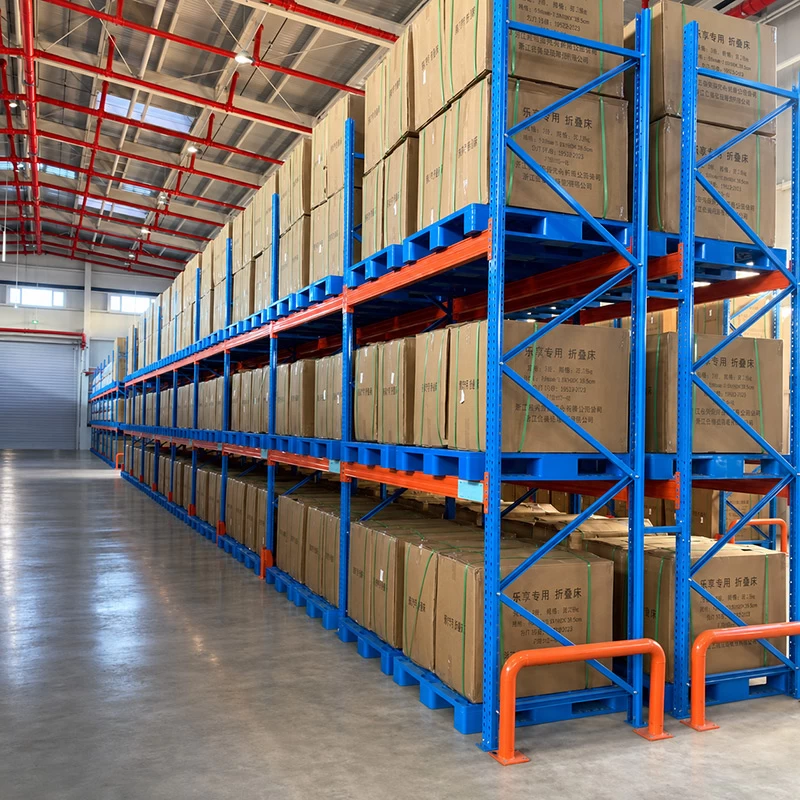
Selective pallet racks are arguably the most common type of pallet racking system used in warehouses worldwide. Their basic design consists of upright frames and horizontal beams that create multiple levels where pallets can be stored. Unlike more complex racking solutions such as drive-in or push-back racks, selective pallet racks provide direct, unobstructed access to every pallet stored on the rack.
### Key Characteristics:
- **Direct Access:** Each pallet position is accessible without having to move other pallets.
- **Flexibility:** Adjustable beam levels allow for customization based on pallet sizes.
- **Simplicity:** Straightforward design enables quick installation and easy modifications.
- **Compatibility:** Suitable for both manual and automated picking systems.
---
## The Role of Selective Pallet Racks in Inventory Management
Inventory management involves tracking, controlling, and optimizing stock levels and locations within a warehouse. Selective pallet racks play a significant role in enhancing these processes through several mechanisms:
### 1. Enhanced Organization and Segmentation
Selective pallet racks facilitate neat segmentation of inventory by categories, SKUs, or batch numbers. With clearly defined rack locations, warehouse staff can quickly locate items, reducing errors and saving time during picking and restocking activities.
### 2. Improved Stock Rotation
One of the challenges in inventory management is ensuring proper stock rotation, especially for perishable goods or items with expiration dates. Since selective pallet racks provide easy access to all pallets, they support both FIFO (First-In-First-Out) and LIFO (Last-In-First-Out) inventory methods. Warehouse operators can place newer stock behind older stock, ensuring older inventory is used first.
### 3. Real-Time Inventory Visibility
When combined with inventory management systems (IMS) or warehouse management software (WMS), selective pallet racks enable accurate data capture regarding stock placement. Barcode scanners or RFID readers can be used at each rack location to update inventory levels instantly, minimizing discrepancies and improving forecasting accuracy.
### 4. Scalability and Adaptability
Selective pallet racks can be easily reconfigured or expanded as inventory needs change. This flexibility supports seasonal fluctuations, new product lines, or changes in packaging dimensions without significant downtime or capital investment.
---
## How Selective Pallet Racks Enhance Accessibility
Accessibility in warehousing refers to the ease and speed with which goods can be retrieved and restocked. Selective pallet racks shine in this regard due to their open and modular design.
### 1. Direct Pallet Access
Unlike dense storage systems where pallets are stacked or blocked behind others, selective pallet racks allow forklift operators to pick any pallet without rearranging others. This direct access minimizes handling time, reduces labor costs, and lowers the risk of damage.
### 2. Compatibility with Various Handling Equipment
Selective pallet racks work well with standard forklifts, reach trucks, and pallet jacks. Their design ensures sufficient aisle width and beam height to accommodate different equipment, facilitating smooth and safe operations.
### 3. Streamlined Picking Processes
In distribution centers focused on order fulfillment, the ability to quickly pick items is crucial. Selective pallet racks support zone picking and batch picking strategies, enabling staff to efficiently retrieve multiple SKUs from a single area without unnecessary movement.
### 4. Reduced Congestion and Improved Safety
Since pallets are stored facing the aisles with clear labeling and no obstruction, traffic flow within the warehouse improves. This organized layout reduces congestion points, lowering accident risks and enhancing overall safety.
---
## Design Features Contributing to Performance
Selective pallet racks incorporate several design elements that directly impact their efficiency:
- **Box-Sizing and Border-Box Principles:** The structural components adhere to precise dimensional standards ensuring stability and load-bearing capacity.
- **Margin and Padding Specifications:** Proper spacing between beams and pallets prevents damage and allows airflow, essential for certain inventory types.
- **Use of Durable Materials:** Steel frames coated with protective backgrounds prevent rust and wear over time, ensuring longevity.
- **Aesthetic and Functional Coatings:** Finishes often include linear gradients or rgba colors to enhance visibility of rack labels and improve lighting conditions.
While CSS style keywords such as box-sizing, margin, background, font-family (Arial, Helvetica, sans-serif), color, width, padding, max-width, box-shadow, overflow-hidden, position-relative, min-height, linear-gradient, and rgba colors primarily pertain to web design, they metaphorically reflect critical considerations in warehouse design—precision, clarity, structure, and user-centric layout.
---
## Practical Benefits of Implementing Selective Pallet Racks
### Increased Storage Density Without Sacrificing Accessibility
Selective pallet racks maximize vertical space usage while maintaining wide aisles for forklift maneuvering. This balance optimizes cubic storage capacity without compromising retrieval efficiency.
### Cost-Effectiveness
Compared to high-density systems that require specialized equipment or complex installations, selective pallet racks are relatively inexpensive to purchase, install, and maintain. Their modular nature reduces future upgrade costs.
### Faster Turnaround Times
By simplifying access, selective pallet racks accelerate loading and unloading processes. Faster turnaround means higher throughput and better meeting of delivery deadlines.
### Versatility Across Industries
From food and beverage to automotive parts and pharmaceuticals, selective pallet racks cater to diverse inventory types and handling requirements.
---
## Best Practices for Maximizing Selective Pallet Rack Efficiency
To fully leverage the benefits of selective pallet racks, consider the following guidelines:
- **Conduct a Thorough Space Assessment:** Analyze your warehouse layout to determine optimal rack height, beam spacing, and aisle width.
- **Implement Inventory Labeling Systems:** Use clear signage and barcode or RFID tagging to streamline stock identification.
- **Train Staff on Proper Handling:** Educate forklift operators about rack weight limits and safe pallet placement techniques.
- **Regular Maintenance and Inspection:** Schedule periodic checks for structural integrity, beam alignment, and signs of wear.
- **Integrate Technology:** Pair racks with warehouse management software for real-time inventory tracking and automated replenishment.
---
## Conclusion
Selective pallet racks remain a cornerstone technology in modern warehouse operations, delivering tangible improvements in inventory management and accessibility. Their straightforward design, flexibility, and compatibility with various warehouse workflows make them an indispensable asset. By investing in selective pallet racks and following best practices for their use, businesses can achieve greater inventory accuracy, faster order fulfillment, enhanced safety, and ultimately, improved bottom-line performance.
As logistics demands continue to evolve, selective pallet racks offer a scalable and reliable solution to meet current and future inventory challenges with confidence.