# Cost Analysis: Is a Selective Pallet Rack the Most Economical Option?
In the realm of warehouse storage solutions, selecting the right pallet racking system is essential for optimizing space, enhancing operational efficiency, and managing costs effectively. Among various options available, **selective pallet racking** has long been considered a popular choice due to its versatility and accessibility. However, when it comes to cost-effectiveness, is a selective pallet rack truly the most economical option? This article delves into a detailed cost analysis of selective pallet racks, comparing them with alternative storage systems, and explores factors that influence their overall economic viability.
---
## Understanding Selective Pallet Racking
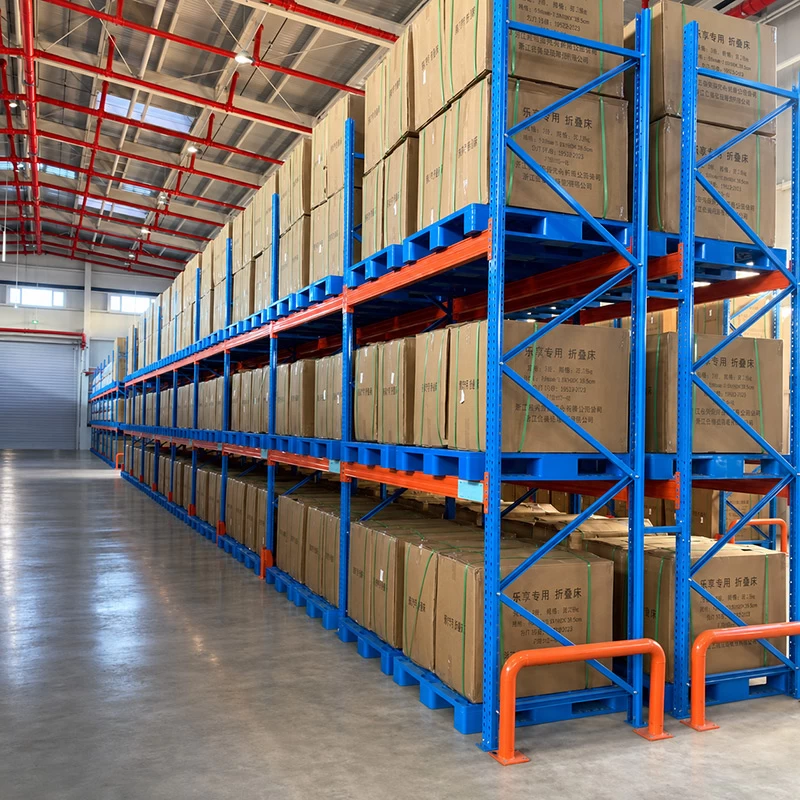
Before diving into the cost breakdown, it’s vital to understand what a selective pallet rack entails. Selective pallet racking is the most common type of pallet storage system. It consists of upright frames and horizontal beams that create bays where pallets can be stored in a single or multiple levels. The defining feature of this system is its direct access to each pallet, allowing any SKU (stock keeping unit) to be retrieved without moving others.
### Advantages of Selective Pallet Racking:
- **Direct Accessibility:** Each pallet can be accessed independently.
- **Flexibility:** Can accommodate various pallet sizes and weights.
- **Scalability:** Easy to extend or reconfigure.
- **Compatibility:** Works well with standard forklifts and warehouse layouts.
While these benefits are clear, the question remains: does the upfront and ongoing cost justify its use compared to other systems?
---
## Components of Cost in Pallet Racking Systems
To conduct a comprehensive cost analysis, we need to consider several components:
1. **Initial Capital Investment**
2. **Installation Costs**
3. **Space Utilization Efficiency**
4. **Operational Costs**
5. **Maintenance and Durability**
6. **Lifecycle Costs**
---
## 1. Initial Capital Investment
Selective pallet racks are generally less expensive than more specialized racking systems such as drive-in racks or automated storage and retrieval systems (AS/RS). The materials – steel uprights and beams – are standard and widely manufactured. Typically, the price per pallet position for selective racks ranges from $75 to $150, depending on specifications such as load capacity and height.
However, this initial cost must be viewed in the context of the amount of storage space utilized. Selective racks require aisle space for forklift movement, which reduces the density of storage compared to high-density solutions like push-back or drive-in racking.
---
## 2. Installation Costs
Installation of selective pallet racks is relatively straightforward and quick, contributing to lower labor costs. Since the components are modular and standardized, warehouses can often install or adjust racks without specialized equipment or long downtimes.
In contrast, other systems may require more complex foundations, electrical work (for automated systems), or additional safety features, which increase installation costs. Thus, selective racks hold an advantage here.
---
## 3. Space Utilization Efficiency
One of the most critical factors affecting cost-effectiveness is how efficiently a racking system utilizes warehouse space. Selective pallet racks require wide aisles (typically 12-14 feet) for forklifts to maneuver, which limits storage density.
For example, in a 10,000 square foot warehouse, selective racks might allow for 30-40% of the floor area to be dedicated to actual pallet storage, while the remainder is aisle space. This inefficiency translates to higher cost per stored pallet because the warehouse must be larger or more expensive per square foot to accommodate the same inventory.
Alternatively, high-density systems such as drive-in racks can increase pallet storage density by up to 50%, reducing the square footage required and thus lowering rent or facility costs.
---
## 4. Operational Costs
The operational efficiency of selective pallet racks is high due to easy access, which reduces time spent retrieving pallets. This can lead to labor savings and increase throughput.
On the downside, the requirement for forklifts to navigate aisles adds to wear and tear on equipment and potential safety risks, especially in narrow aisles or busy warehouses. However, selective racks do not require specialized equipment.
In comparison, automated systems reduce labor costs further but come with higher upfront and maintenance costs.
---
## 5. Maintenance and Durability
Selective pallet racks are constructed from durable steel and designed to withstand heavy loads. Maintenance costs are generally low but may include occasional repairs from forklift impacts or wear and tear.
Other systems, particularly those with moving parts (e.g., push-back racks, AS/RS), have higher maintenance costs due to mechanical complexity.
---
## 6. Lifecycle Costs
When considering the full lifecycle – from purchase, installation, operation, maintenance, to eventual replacement – selective pallet racks often prove economical for warehouses that prioritize flexibility and direct access over maximum storage density.
Warehouses with frequently changing inventory or those requiring FIFO (first-in-first-out) inventory management benefit from selective racks’ simplicity and durability.
---
## Comparing Selective Pallet Racks with Other Storage Systems
| Storage System | Upfront Cost | Space Utilization | Operational Efficiency | Maintenance Cost | Ideal Use Case |
|---------------------|--------------|-------------------|------------------------|------------------|---------------------------------------|
| Selective Pallet Rack| Moderate | Low | High | Low | Flexible, mixed SKU operations |
| Drive-In/Drive-Thru | Lower | High | Moderate | Moderate | Bulk storage, LIFO inventory |
| Push-Back Rack | Higher | Moderate-High | Moderate | Moderate-High | High turnover, LIFO |
| AS/RS (Automated) | Highest | Very High | Very High | High | High volume, consistent SKU, automation|
---
## Additional Considerations: Design and Layout Impact
Cost efficiency is also influenced by design elements such as:
- **Box-Sizing and Load Distribution:** Proper engineering ensures the rack’s box-sizing (structural footprint) optimizes load distribution, minimizing structural failures and maximizing usable space.
- **Margin and Padding of Layout:** Strategic placement of racks, considering margin spaces and padding around aisles, affects both safety and storage capacity.
- **Material and Finish:** Choices such as powder-coated steel or galvanized finishes impact longevity and corrosion resistance, influencing maintenance costs.
- **Warehouse Aesthetics and Safety:** Using color-coded beams and clear signage enhances safety and efficiency, potentially reducing costly accidents.
---
## Case Study: Warehouse XYZ
Warehouse XYZ operates a distribution center with 20,000 SKUs. They initially installed selective pallet racks, investing $200,000 in racking components and installation. Over two years, they observed:
- **Pros:**
- Easy access enabled rapid picking, reducing labor costs by 15%.
- Minimal maintenance expenses.
- Ability to reconfigure racks as inventory changed.
- **Cons:**
- Required large aisles, limiting storage density.
- Facility expansion was needed sooner than expected due to space constraints.
A subsequent analysis showed that adopting a high-density drive-in racking system could have saved approximately $50,000 annually in facility costs but increased operational complexity.
---
## Conclusion: Is a Selective Pallet Rack the Most Economical Option?
The answer depends on the specific needs and constraints of your warehouse operation. Selective pallet racks offer:
- **Economical Initial Investment**
- **Low Installation and Maintenance Costs**
- **High Operational Flexibility and Efficiency**
However, they sacrifice storage density due to aisle space requirements, which can translate to higher facility costs over time.
For warehouses prioritizing **accessibility, flexibility, and moderate storage density**, selective pallet racks are indeed a cost-effective solution.
Conversely, if your priority is maximizing storage space and reducing facility size, investing in higher-density systems might yield better long-term economics despite higher upfront costs.
---
## Recommendations for Decision Makers
- Conduct a **thorough space utilization analysis** before purchasing.
- Factor in **labor and operational efficiencies** alongside hardware costs.
- Consider **future growth and inventory turnover rates**.
- Evaluate **maintenance capabilities** and safety standards.
- Engage with racking specialists to customize solutions based on your specific warehouse layout and operational needs.
---
In summary, selective pallet racks remain a versatile and economically sensible choice for many warehouse operations. Their balance between cost, accessibility, and flexibility makes them a compelling option, though not universally the most economical depending on individual requirements.
---
*Keywords: selective pallet rack, cost analysis, warehouse storage, space utilization, operational efficiency, maintenance, capital investment, installation cost, lifecycle costs.*