# The Role of Drive-In and Drive-Thru Pallet Racks in Cold Storage Facilities
In the realm of modern warehousing and logistics, cold storage facilities represent a critical component of the supply chain for perishable goods. These specialized environments demand innovative storage solutions that maximize space utilization while maintaining product integrity under strict temperature controls. Among the various storage systems available, **drive-in and drive-thru pallet racks** have emerged as pivotal technologies that enhance operational efficiency in cold storage settings.
This article explores the vital role of drive-in and drive-thru pallet racking systems within cold storage facilities, outlining their design principles, benefits, challenges, and best practices for implementation. We will also examine how these racking systems can optimize space, improve inventory management, and support the rigorous demands of cold storage operations.
---
## Understanding Drive-In and Drive-Thru Pallet Racks
Before delving into their specific applications in cold environments, it’s essential to understand the fundamental differences and functionalities of drive-in and drive-thru pallet racks.
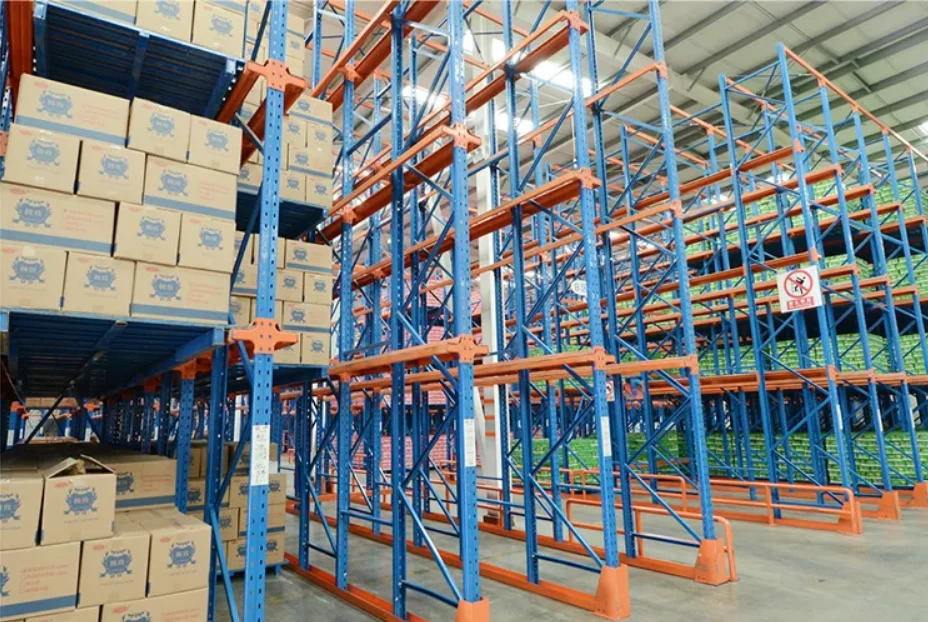
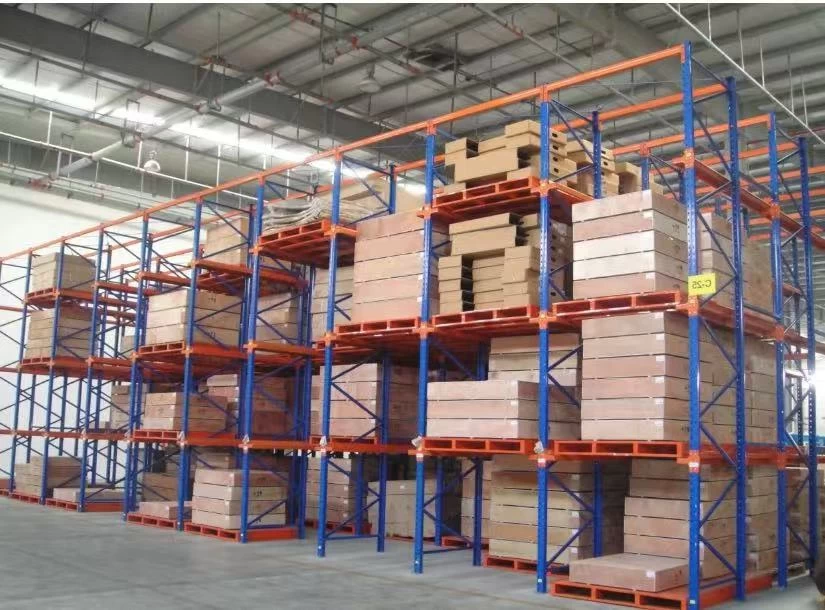
- **Drive-In Pallet Racks**: Designed for Last-In, First-Out (LIFO) inventory management, drive-in racks allow forklifts to enter the rack structure from one side only. Pallets are stored several positions deep on rails, maximizing vertical and horizontal space by reducing aisle widths. This system is ideal for storing large quantities of homogeneous products.
- **Drive-Thru Pallet Racks**: Similar to drive-in racks but with access from both sides, allowing for First-In, First-Out (FIFO) inventory flow. This configuration is useful when product rotation is crucial, such as in food storage or pharmaceuticals where expiration dates must be carefully managed.
Both systems reduce the number of aisles required compared to conventional selective pallet racking, thereby increasing storage density — a critical factor in expensive cold storage environments.
---
## The Importance of Efficient Storage in Cold Storage Facilities
Cold storage warehouses maintain controlled temperatures (often below freezing) to preserve perishables like fruits, vegetables, dairy, meat, and pharmaceuticals. These facilities face unique constraints:
- **Energy Efficiency**: Cooling costs constitute a significant portion of operating expenses. Efficient space usage reduces the volume needing climate control, lowering energy consumption.
- **Space Optimization**: Cold storage real estate is costly. Maximizing cubic storage space is essential to justify high operational costs.
- **Product Integrity**: Proper handling and storage reduce spoilage and maintain compliance with safety standards.
- **Inventory Management**: Accurate rotation and easy accessibility prevent waste and ensure timely distribution.
Drive-in and drive-thru pallet racks address many of these challenges by optimizing space and enabling streamlined inventory control.
---
## Advantages of Drive-In and Drive-Thru Pallet Racks in Cold Storage
### 1. **Maximized Storage Density**
Drive-in and drive-thru racks significantly increase storage capacity by minimizing aisle space. Since forklifts travel inside the rack structure, fewer aisles are necessary compared to selective racks, which require wide aisles for forklift maneuvering. This compact design is particularly advantageous in cold storage, where every cubic foot of refrigerated volume translates directly into energy savings.
### 2. **Improved Energy Efficiency**
By reducing aisle volume, drive-in and drive-thru racks lower the overall area requiring refrigeration. The reduced air volume means cooling systems can maintain target temperatures more efficiently, directly impacting utility costs. Additionally, compact storage helps maintain consistent temperatures around stored goods, preventing hot spots or temperature fluctuations.
### 3. **Enhanced Inventory Control**
Drive-thru racks facilitate FIFO inventory management, crucial for products with limited shelf lives. By allowing pallets to enter from one side and exit from the other, older stock is dispatched first, reducing waste. Drive-in racks, while suited for LIFO methods, are excellent for bulk storage of identical items where rotation is less critical.
### 4. **Increased Safety and Ergonomics**
Modern drive-in and drive-thru racks are engineered with robust materials and safety features such as guide rails and protective barriers. This ensures forklift operators can navigate safely even under tight conditions. Additionally, by reducing the need for extensive forklift travel in cold areas, worker exposure to harsh temperatures is minimized.
---
## Design Considerations for Cold Storage Applications
When implementing drive-in or drive-thru pallet racks in cold storage, several factors must be carefully considered to maximize benefits and mitigate risks.
### Material Selection and Coatings
Cold storage environments expose racking systems to extreme temperatures and moisture, which can accelerate corrosion and material fatigue. Using galvanized steel or powder-coated finishes helps prevent rust and maintain structural integrity. Some facilities opt for stainless steel components in critical areas for enhanced durability.
### Structural Design and Load Capacity
Pallet racks must be engineered to handle heavy loads, especially considering the additional stresses caused by forklifts moving inside the rack bays. The design should comply with local building codes and safety regulations, accounting for factors such as seismic activity if applicable.
### Forklift Compatibility and Aisle Width
Forklift types (e.g., reach trucks, turret trucks) influence aisle width requirements. Drive-in and drive-thru racks allow narrower aisles, but careful planning is needed to ensure forklifts can safely enter and exit rack bays. Automated or semi-automated forklift systems are increasingly integrated for precision handling in cold environments.
### Temperature and Humidity Controls
Racks should be designed to minimize airflow disruption and condensation issues. Proper floor drainage and vapor barriers prevent moisture accumulation, which can damage both racks and stored products.
---
## Challenges and Solutions
While drive-in and drive-thru pallet racks offer substantial benefits, cold storage operators must address several challenges to fully leverage these systems.
### Challenge 1: **Reduced Accessibility**
Because pallets are stored multiple positions deep, accessing a specific pallet may require moving others, complicating inventory retrieval. This is especially true in drive-in racks with LIFO inventory flow.
**Solution:** Implement barcode scanning and warehouse management systems (WMS) to accurately track pallet locations and optimize picking routes. For products requiring frequent access, consider combining drive-in/drive-thru racks with selective racking in a hybrid layout.
### Challenge 2: **Operational Complexity**
Forklift operators must be highly trained to maneuver safely within confined rack structures, particularly in frozen environments where visibility may be reduced.
**Solution:** Utilize driver training programs and invest in technology such as onboard cameras and sensors to enhance operator awareness. Automation can also reduce human error.
### Challenge 3: **Maintenance Under Harsh Conditions**
Cold storage presents challenges like ice buildup and condensation, potentially damaging rack components and posing safety hazards.
**Solution:** Schedule regular inspections and maintenance routines focused on environmental wear. Employ anti-corrosion treatments and consider environmental controls to manage humidity.
---
## Best Practices for Implementation
To maximize the advantages of drive-in and drive-thru pallet racks in cold storage facilities, consider the following best practices:
- **Detailed Planning**: Conduct thorough space analysis and workflow modeling before installation. Engage racking experts familiar with cold storage requirements.
- **Inventory Profiling**: Classify stored products by turnover rate and temperature sensitivity to determine appropriate rack types (drive-in vs. drive-thru) and locations.
- **Integration with Warehouse Management Systems**: Leverage WMS to coordinate inventory tracking, improve FIFO/LIFO adherence, and manage pallet movements efficiently.
- **Operator Training**: Invest in comprehensive training programs focusing on safe operation within rack structures and cold environments.
- **Regular Maintenance**: Establish preventive maintenance schedules to inspect racks, remove ice or frost buildup, and address corrosion promptly.
- **Safety Protocols**: Implement clear signage, lighting, and emergency response plans tailored for cold storage and confined rack spaces.
---
## Future Trends: Automation and Smart Racking
The future of drive-in and drive-thru pallet racks in cold storage lies in automation and smart technologies. Automated Guided Vehicles (AGVs) and robotic pallet movers can navigate narrow rack aisles with precision, reducing human exposure to cold and minimizing errors. Integration with IoT sensors enables real-time monitoring of rack conditions and inventory status, facilitating predictive maintenance and optimized space usage.
Moreover, advances in materials science promise longer-lasting, corrosion-resistant rack components designed specifically for the demanding cold storage environment.
---
## Conclusion
Drive-in and drive-thru pallet racks play a crucial role in the efficient operation of cold storage facilities. By maximizing storage density, enhancing inventory control, and improving energy efficiency, these racking systems address the unique challenges of temperature-controlled warehousing. While their implementation requires careful design, operator training, and maintenance, the benefits they bring to space optimization and cost reduction are undeniable.
As cold storage demand continues to grow globally, driven by expanding cold chains and consumer expectations for fresh products, investing in advanced pallet racking solutions like drive-in and drive-thru systems becomes ever more critical for warehouse operators seeking competitive advantage and operational excellence.
---
**Keywords:** drive-in pallet racks, drive-thru pallet racks, cold storage facilities, warehouse storage systems, cold storage racking, pallet storage density, inventory management, refrigerated warehousing, FIFO inventory, LIFO inventory, warehouse efficiency, energy saving cold storage, forklift safety, warehouse automation, corrosion-resistant racking