**Selective Pallet Rack vs. Other Pallet Rack Types: Which One Suits Your Business?**
In the dynamic world of warehousing and inventory management, efficient storage solutions play a pivotal role in optimizing space, improving accessibility, and enhancing operational workflows. Among various storage systems, pallet racking stands out as a fundamental component, enabling businesses to store goods on pallets at multiple levels. However, with numerous types of pallet racks available on the market, choosing the right system can be challenging. This article explores **Selective Pallet Rack** systems in comparison to other popular pallet rack types, providing insights that will help you determine which solution best fits your business needs.
---
### Understanding Pallet Racking Systems
Before diving into the differences, it’s essential to understand what pallet racking is and why it matters. Pallet racks are structural frameworks designed to support materials on pallets, allowing vertical storage and making use of warehouse height rather than just floor space. The proper racking system can enhance storage density, improve inventory management, and ensure safety.
Some of the most commonly used pallet rack types include:
- Selective Pallet Rack
- Drive-In/Drive-Through Rack
- Push-Back Rack
- Pallet Flow (Gravity Flow) Rack
- Double Deep Rack
Each has unique features, advantages, and limitations. Let’s analyze the **Selective Pallet Rack** first and then compare it with the others.
---
### What is Selective Pallet Rack?
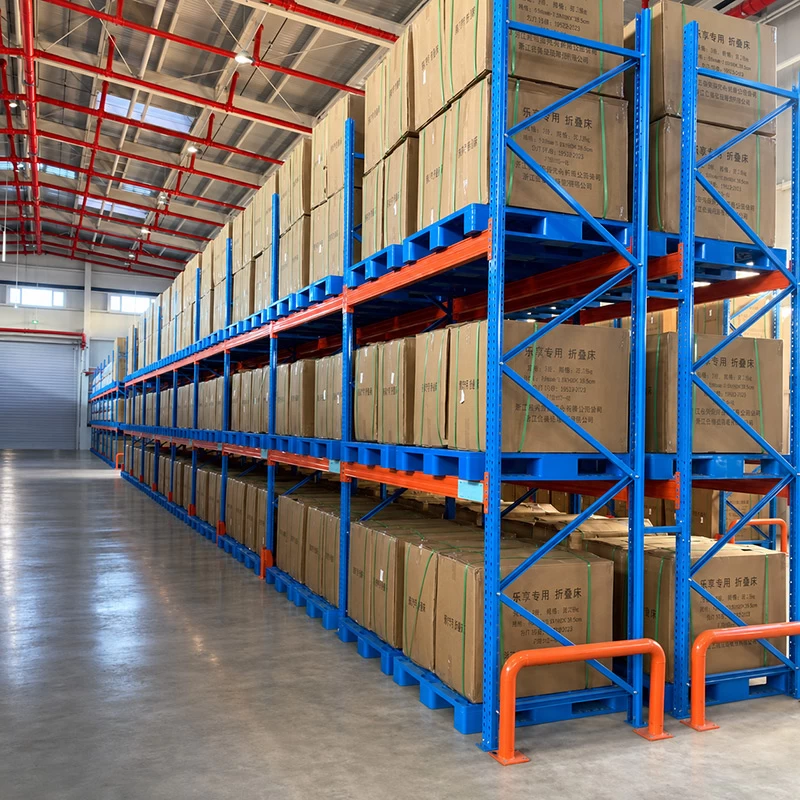
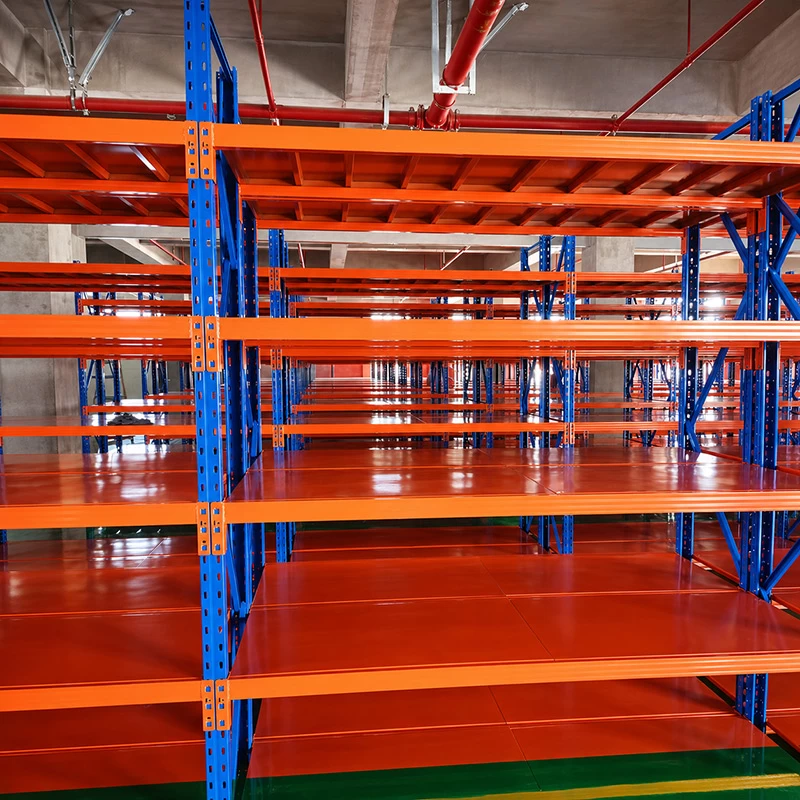
Selective pallet racking is the most traditional and widely used pallet racking system. It consists of upright frames connected by horizontal beams, creating multiple rows and levels where pallets can be stored individually. This system allows direct access to every pallet without moving others, making it highly versatile.
**Key Features of Selective Pallet Rack:**
- **Direct Access:** Each pallet is independently accessible.
- **Flexibility:** Easy to adjust beam levels and rack configurations.
- **Compatibility:** Works well with forklifts for loading/unloading.
- **Simplicity:** Simple design, easy to install and maintain.
---
### Advantages of Selective Pallet Racking
1. **Accessibility:** The primary advantage is immediate access to every pallet, which is critical for operations requiring frequent picking or rotation of stock.
2. **Versatility:** Since pallets are accessible from aisles, this system accommodates a wide variety of pallet sizes and product types.
3. **Cost-Effective Initial Investment:** Compared to more complex systems, selective racks have lower upfront costs.
4. **Inventory Management:** Facilitates First-In-First-Out (FIFO) or Last-In-First-Out (LIFO) inventory strategies, depending on layout.
---
### Limitations of Selective Pallet Racking
- **Space Utilization:** Because aisles between racks need to be wide enough for forklifts, space utilization (measured as cubic storage capacity) is lower compared to other high-density systems.
- **Less Suitable for High-Density Storage:** For warehouses with limited floor area but high volume, selective racks may not maximize storage potential.
---
### Comparing Selective Pallet Rack to Other Pallet Rack Types
Now, let’s explore how selective pallet racks compare to alternative systems in terms of space efficiency, cost, accessibility, and suitability.
---
#### 1. Drive-In / Drive-Through Pallet Racks
**Description:** These systems allow forklifts to drive directly into the rack structure to load or retrieve pallets. Drive-in racks have one entry/exit point, while drive-through racks offer entry from both ends.
**Advantages:**
- Higher storage density due to eliminating multiple aisles.
- Suitable for large quantities of homogeneous products.
**Disadvantages:**
- Limited selectivity; pallets are accessed on a Last-In-First-Out (LIFO) basis.
- Requires skilled forklift operation within racks.
- Not ideal for varied or fast-moving inventory.
**Selective Pallet Rack vs. Drive-In:**
Selective racks offer superior accessibility and flexibility, while drive-in racks excel in maximizing space for bulk storage of uniform items. Businesses prioritizing fast picking will favor selective racks, whereas those with large volumes of identical goods may prefer drive-in systems.
---
#### 2. Push-Back Pallet Racks
**Description:** Pallets are loaded from the front and automatically pushed back along inclined rails, creating a LIFO system.
**Advantages:**
- Increased storage density compared to selective racks.
- Easier access compared to drive-in racks.
- Suitable for moderate SKUs with some product variation.
**Disadvantages:**
- More expensive than selective racks.
- Restricted to LIFO inventory management.
- Maintenance of moving parts required.
**Selective Pallet Rack vs. Push-Back:**
Push-back racks balance space utilization and accessibility, yet selective racks provide better flexibility and simpler operation. Push-back may suit businesses with fewer SKUs but higher pallet turnover per SKU.
---
#### 3. Pallet Flow (Gravity Flow) Racks
**Description:** Utilizes inclined rollers that allow pallets to flow from loading to picking side via gravity, supporting FIFO inventory management.
**Advantages:**
- High-density storage combined with FIFO.
- Reduces labor by streamlining picking process.
- Ideal for perishable goods or products with expiration dates.
**Disadvantages:**
- Higher cost and complexity.
- Requires regular maintenance.
- Loading and unloading areas must be carefully designed.
**Selective Pallet Rack vs. Pallet Flow:**
Pallet flow racks improve picking efficiency and inventory rotation but are costlier and more complex. Selective racks remain preferable for businesses seeking simplicity and maximum selectivity.
---
#### 4. Double Deep Pallet Racks
**Description:** Similar to selective racks but pallets are stored two deep, doubling storage capacity but limiting direct access to second-row pallets.
**Advantages:**
- Increased storage density.
- Moderate cost increase over selective racks.
**Disadvantages:**
- Reduced selectivity; requires specialized forklifts with extended reach.
- Potentially slower retrieval times.
**Selective Pallet Rack vs. Double Deep:**
Selective racks provide full accessibility, whereas double deep racks compromise selectivity for density. Businesses needing high turnover speed may choose selective racks; those prioritizing space efficiency might opt for double deep.
---
### Factors to Consider When Choosing Your Pallet Rack System
Selecting the ideal pallet rack system depends on multiple factors unique to your business, including:
1. **Inventory Characteristics:** SKU variety, pallet size, turnover rate, and perishability.
2. **Warehouse Space:** Floor area, ceiling height, and aisle width constraints.
3. **Operational Priorities:** Speed of access, picking frequency, and inventory rotation method.
4. **Budget:** Initial investment, maintenance costs, and potential downtime.
5. **Equipment Compatibility:** Forklift types and handling equipment.
6. **Safety Requirements:** Compliance with industry standards and load capacities.
---
### Practical Recommendations
- **For Businesses Needing Maximum Accessibility:** Selective pallet racks are optimal when rapid and frequent access to pallets is essential, such as retail distribution centers or manufacturing facilities with diverse product lines.
- **For High-Density Bulk Storage:** Drive-in or drive-through racks suit operations storing large volumes of identical pallets with less frequent access.
- **For FIFO Inventory Management:** Pallet flow racks deliver excellent results, especially for perishable goods industries like food and pharmaceuticals.
- **For Balancing Density and Access:** Push-back or double deep racks can be middle-ground solutions for medium-SKU warehouses.
---
### Conclusion
Selecting the right pallet rack system is a strategic decision that impacts warehouse efficiency, operational costs, and overall business productivity. While **Selective Pallet Racks** remain the most versatile and accessible option suited to a broad range of applications, alternative systems like drive-in, push-back, pallet flow, and double deep racks offer compelling benefits in storage density and specialized inventory management.
By carefully evaluating your inventory profiles, warehouse layout, operational requirements, and budget, you can make an informed choice that aligns with your business goals. Consulting with storage experts and conducting onsite assessments further ensures the chosen pallet rack system optimally supports your warehouse’s performance.
---
### About the Author
[Author Name] is a supply chain and logistics expert with over 15 years of experience in warehouse design and inventory optimization. Specializing in storage solutions, [Author Name] assists businesses across diverse industries in implementing efficient racking systems that maximize space and streamline operations.
---
**Keywords:** box-sizing, border-box, margin, background, font-family, Arial, Helvetica, sans-serif, color, width, padding, max-width, auto margin (centered layout), box-shadow, overflow-hidden, position-relative, min-height, linear-gradient, rgba colors, base64 image (JPEG), sde-body, sde-detail