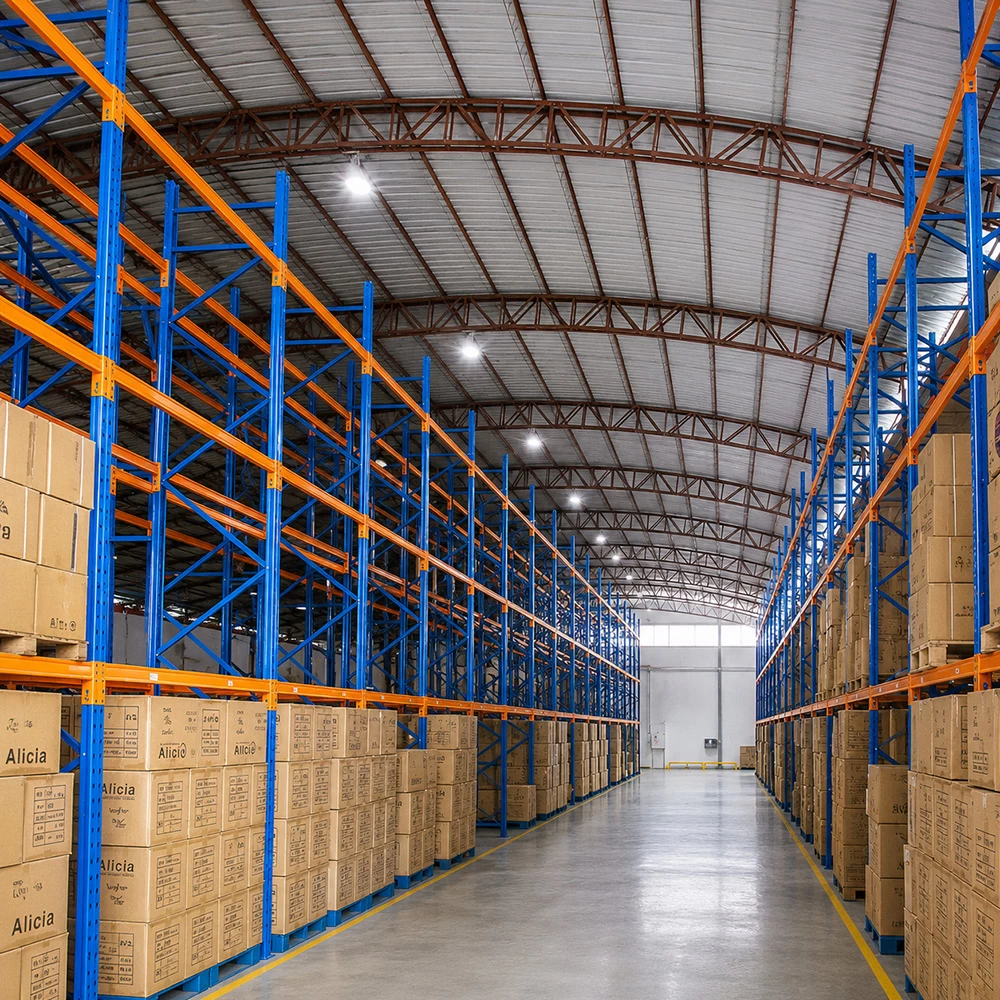
# How to Maximize Warehouse Space with Pallet Racking Systems
Efficient warehouse management plays a critical role in the success of any logistics, manufacturing, or retail operation. One of the most effective ways to optimize warehouse space and enhance operational productivity is through the strategic use of pallet racking systems. These systems not only increase storage density but also improve accessibility, safety, and inventory management. In this comprehensive article, we will explore how businesses can maximize warehouse space by implementing pallet racking solutions while considering key aspects such as layout design, structural integrity, and operational flow.
---
## Understanding Pallet Racking Systems
Pallet racking systems are modular storage structures designed to hold palletized goods in horizontal rows with multiple levels. They are made from durable steel components and can be customized based on warehouse dimensions, load requirements, and product types. Common types include selective, drive-in, push-back, pallet flow, and cantilever racking, each offering different benefits depending on the specific warehouse needs.
### Why Pallet Racking?
- **Space Utilization:** By stacking pallets vertically, racking systems significantly increase storage capacity without expanding the warehouse footprint.
- **Improved Accessibility:** Properly configured racks allow easy access to inventory, reducing retrieval time.
- **Enhanced Safety:** Designed to handle heavy loads safely, these systems minimize risks associated with improper stacking.
- **Inventory Management:** Facilitates better organization and categorization, improving stock rotation and tracking.
---
## Step 1: Assess Your Warehouse Space and Inventory Needs
Before selecting a pallet racking system, it’s crucial to conduct a detailed assessment of your warehouse space and inventory characteristics.
### Measure Warehouse Dimensions
- **Width and Height:** Determine the warehouse width and ceiling height to understand vertical and horizontal storage potential.
- **Aisle Width:** Plan aisle widths that accommodate forklifts or pallet jacks, balancing between maximizing rack density and maintaining maneuverability.
### Analyze Load Requirements
- **Weight:** Know the average and maximum weight per pallet to choose racking with adequate load-bearing capacity.
- **Size:** Understand pallet dimensions and product volume to select appropriate rack sizes.
### Forecast Inventory Turnover
- Fast-moving items may require easier access through selective racking.
- Slow-moving or bulk items could be stored in higher-density systems like drive-in racks.
---
## Step 2: Choose the Right Pallet Racking System
Different racking configurations serve varying storage goals. Selecting the right system depends on your operational priorities.
### Selective Pallet Racking
The most common type, selective racks provide direct access to every pallet. Ideal for warehouses with high SKU variety and frequent stock rotation. Although they consume more aisle space, their accessibility benefits often outweigh the space cost.
### Drive-In/Drive-Through Racking
These systems maximize storage density by allowing forklifts to enter the rack structure. Perfect for storing large quantities of homogeneous products but limit pallet access (LIFO or FIFO depending on configuration).
### Push-Back Racking
Utilizes carts on inclined rails where pallets are loaded from the front and pushed back. This system increases storage density while maintaining relatively easy access.
### Pallet Flow Racking
Uses gravity rollers to move pallets from the loading side to the picking side, facilitating FIFO inventory management with high storage density.
---
## Step 3: Optimize Layout Design Using Grid Principles
Maximizing space is not just about stacking higher; it involves intelligent layout planning. Applying grid concepts helps create an organized, scalable warehouse environment.
### Implementing Grid-Based Layouts
- **Display Grid Concept:** Think of the warehouse floor as a grid, dividing it into zones for racks, aisles, staging, and operational areas.
- **Grid Template Columns:** Similar to CSS grid-template-columns property in web design, warehouse planners can replicate “repeat(4,1fr)” logic by creating multiple equal-width rack bays that fit uniformly within the space.
- **Container and Max-Width:** Define maximum rack widths and container zones ensuring no overcrowding occurs, preserving structural integrity and workflow efficiency.
By using a grid approach, you can standardize rack sizes and aisle widths, making future scalability and reconfiguration more manageable.
---
## Step 4: Utilize Vertical Space Effectively
Vertical expansion is one of the simplest ways to multiply storage without enlarging warehouse footprint.
### Consider Ceiling Height
- Use pallet racks that extend close to the ceiling, respecting fire codes and sprinkler system clearance.
- Multi-tier racking systems can add mezzanine floors, doubling usable storage area.
### Ensure Structural Stability
- Choose racks with sufficient load ratings.
- Anchor racks properly to prevent tipping hazards.
- Incorporate safety features such as beam locks and column protectors.
---
## Step 5: Balance Aisle Width for Efficiency and Density
Aisle width directly influences both storage capacity and operational efficiency.
### Narrow Aisle vs. Wide Aisle
- Narrow aisles increase rack density but require specialized narrow-aisle forklifts.
- Wide aisles provide ease of movement but reduce storage capacity.
### Optimize Based on Equipment
Consider the dimensions of forklifts or pallet jacks used in your warehouse when deciding aisle widths to ensure safety and speed.
---
## Step 6: Enhance Warehouse Organization and Navigation
Maximizing space also involves improving how goods are stored and accessed.
### Label Racks Clearly
Implement block titles or process-title-lock signage to identify sections and inventory types quickly.
### Use Consistent Font-Family and Font-Size on Signage
Clear, legible labels contribute to faster picking and restocking, reducing downtime.
### Maintain Clean and Organized Storage Zones
Use containers and trays with consistent padding and box-sizing to prevent damage and optimize space utilization within racks.
---
## Step 7: Incorporate Technology and Automation
Automation can amplify space utilization efforts by improving speed and accuracy.
### Warehouse Management Systems (WMS)
Track inventory locations and movements in real-time, helping optimize rack placement based on demand patterns.
### Automated Storage and Retrieval Systems (ASRS)
Automated cranes and shuttles operate in narrow aisles and high racks, increasing storage density without sacrificing accessibility.
---
## Step 8: Regularly Review and Adjust Your Pallet Racking Setup
Warehouse needs evolve; regular audits and adjustments ensure continued space maximization.
### Monitor Stock Levels and Movement
Identify slow-moving or obsolete inventory that can be relocated or removed.
### Reconfigure Racks as Needed
Use modular rack components to adapt bays, heights, or aisle widths in response to changing product mixes.
---
## Conclusion
Maximizing warehouse space with pallet racking systems is a multifaceted strategy involving careful planning, smart design, and continuous optimization. By assessing your warehouse dimensions and inventory needs, selecting appropriate racking types, applying grid-based layout principles, leveraging vertical space, and integrating technology, you can significantly enhance storage capacity and operational efficiency. Remember, pallet racking is not just a storage solution but a critical component of your warehouse ecosystem that, when optimized, drives productivity, safety, and profitability.
Invest in professional consultation and stay updated with the latest industry standards and innovations to keep your warehouse running at peak efficiency. With the right approach, pallet racking systems will transform your warehouse into a model of space utilization excellence.
---
**Keywords:** product-page, width, font-family, background, padding, box-sizing, color, container, max-width, margin, title, text-align, font-size, font-weight, margin-bottom, position, block-title, process-title-lock, intro, line-height, gallery, display:grid, grid-template-columns, repeat(4,1fr).