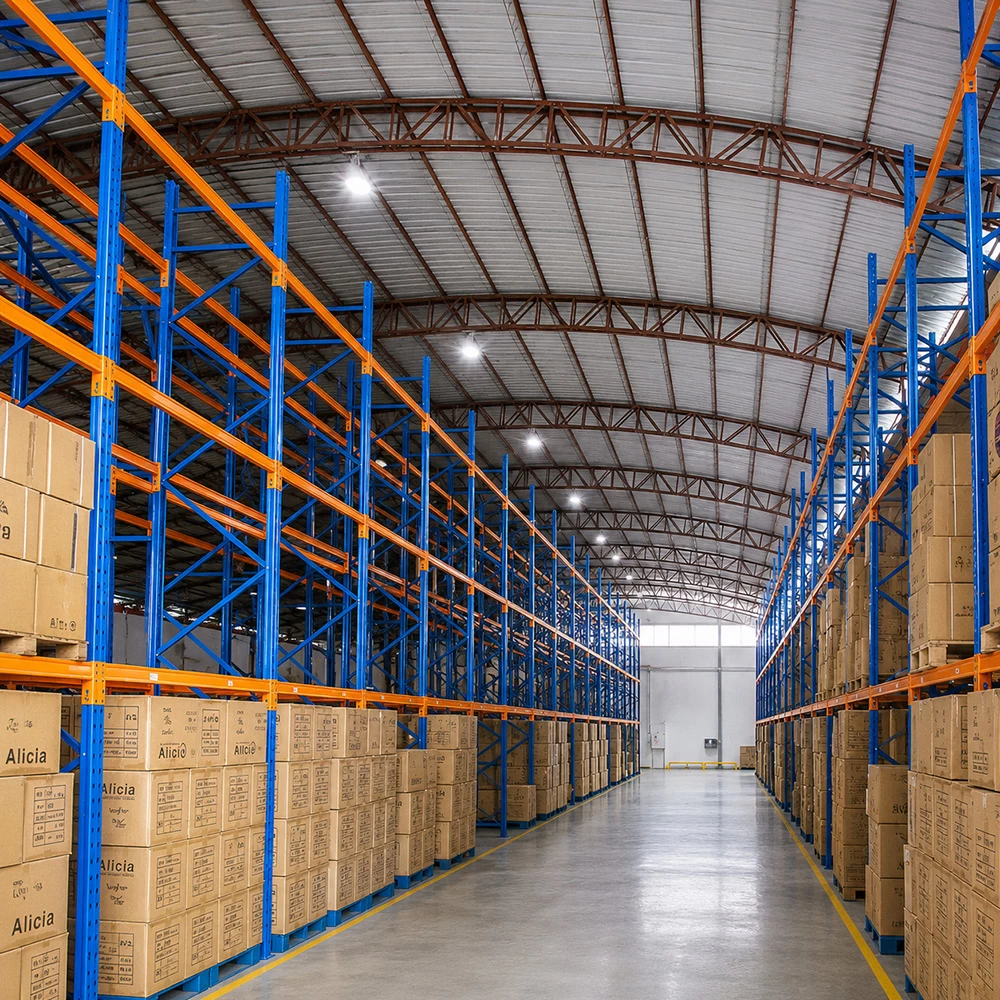
# Comparing Different Types of Pallet Racks: Selective, Drive-In, Push Back & More
Efficient warehouse storage is crucial for optimizing space, improving inventory management, and streamlining operations. One of the fundamental components in warehouse design is the choice of pallet racking systems. Pallet racks support the storage of goods on pallets and come in various configurations tailored to different operational needs. This article provides an in-depth comparison of the most common types of pallet racks: Selective, Drive-In, Push Back, and others, helping you make an informed decision on which system suits your warehouse requirements best.
---
## Introduction
Choosing the right pallet racking system impacts not only how much you can store but also how quickly and efficiently you can access your inventory. The diversity of pallet rack designs caters to different storage densities, accessibility levels, and handling equipment. Whether you prioritize high selectivity or maximum density, understanding the features, benefits, and limitations of each rack type will guide you to an optimal solution.
This article delves into:
- **Selective Pallet Racks**
- **Drive-In/Drive-Through Pallet Racks**
- **Push Back Pallet Racks**
- **Pallet Flow Racks**
- **Double Deep Pallet Racks**
Each section presents a detailed overview of the design, advantages, disadvantages, and ideal use cases.
---
## 1. Selective Pallet Racks
### Overview
Selective pallet racking is the most common and versatile system used in warehouses globally. It consists of upright frames and load beams that create multiple shelf levels where pallets rest. This open design allows direct access to every pallet without moving others.
### Features
- **Individual pallet access:** Every pallet is accessible directly from the aisle.
- **Adjustable beam levels:** Load beams can be repositioned to accommodate different pallet sizes.
- **Compatibility:** Works well with standard forklifts.
### Advantages
- **High selectivity:** Ideal for warehouses with many SKUs and frequent stock rotation.
- **Flexibility:** Easy to reconfigure for changing storage needs.
- **Simplicity:** Straightforward installation and maintenance.
- **Cost-effective:** Generally lower initial investment compared to more complex systems.
### Disadvantages
- **Lower storage density:** Requires multiple aisles, which consume floor space.
- **Limited space utilization:** Inefficient use of warehouse volume compared to dense storage systems.
### Ideal Use Cases
- Warehouses with diverse inventory and high SKU counts.
- Operations requiring first-in-first-out (FIFO) or last-in-first-out (LIFO) access.
- Businesses valuing flexibility and easy stock picking.
---
## 2. Drive-In and Drive-Through Pallet Racks
### Overview
Drive-in and drive-through racks are designed to maximize storage density by eliminating multiple aisles. Forklifts enter the rack structure to deposit or retrieve pallets, storing them multiple rows deep.
- **Drive-In Racks:** Single entry and exit point; operates on last-in, first-out (LIFO) principle.
- **Drive-Through Racks:** Entry and exit on opposite sides; supports first-in, first-out (FIFO) flow.
### Features
- **Deep lane storage:** Pallets are stored several rows deep.
- **Reduced aisle space:** Fewer aisles mean more pallets per square foot.
- **Heavy-duty construction:** Must withstand forklift traffic inside the rack.
### Advantages
- **High storage density:** Optimal for bulk storage of homogeneous products.
- **Space-saving:** Reduces the number of aisles, increasing usable storage space.
- **Cost savings:** More pallets stored within the same footprint.
### Disadvantages
- **Limited selectivity:** Access only to the first pallet in the lane.
- **Risk of product damage:** Forklift navigation inside racks requires skilled operators.
- **Longer retrieval times:** Pallets deeper in the lane require moving others.
### Ideal Use Cases
- Cold storage and freezer warehouses.
- Homogeneous product storage (e.g., beverage, food, raw materials).
- Situations where storage density outweighs selectivity.
---
## 3. Push Back Pallet Racks
### Overview
Push back racks utilize a system of nested carts on inclined rails, allowing pallets to be loaded from the front and automatically pushed back as new pallets are added. When a pallet is removed, the next one rolls forward, enabling a last-in, first-out (LIFO) operation.
### Features
- **Back-to-back lanes:** Pallets are stored 2-6 deep.
- **Gravity-assisted movement:** Rails incline to facilitate pallet movement.
- **No forklift entry:** Unlike drive-in racks, forklifts do not enter the rack structure.
### Advantages
- **Higher density than selective racks:** Increases storage capacity while maintaining good access.
- **Improved selectivity:** Easier pallet retrieval compared to drive-in systems.
- **Reduced aisle space:** One aisle services multiple pallet positions.
### Disadvantages
- **LIFO system:** Not suitable for FIFO inventory management.
- **Higher initial cost:** More complex mechanical components.
- **Maintenance:** Rails and carts require regular inspection.
### Ideal Use Cases
- Warehouses with moderate SKU variety but increased storage density needs.
- Businesses using LIFO inventory strategies.
- Distribution centers handling non-perishable goods.
---
## 4. Pallet Flow Racks
### Overview
Pallet flow racks use roller tracks and gravity to move pallets from the loading side to the picking side, supporting first-in, first-out (FIFO) inventory rotation. Pallets are loaded at the back and retrieved from the front.
### Features
- **FIFO system:** Ensures older stock is picked first.
- **Gravity-driven movement:** Automatic pallet movement reduces labor.
- **High throughput:** Continuous flow improves picking efficiency.
### Advantages
- **Improved inventory rotation:** Essential for perishable goods.
- **High storage density:** Uses deep lane storage similar to drive-in racks.
- **Labor savings:** Reduced forklift movement inside racks.
### Disadvantages
- **Higher initial investment:** Roller systems and design complexity add cost.
- **Maintenance requirement:** Rollers and tracks need upkeep.
- **Limited SKU flexibility:** Best suited for homogenous products.
### Ideal Use Cases
- Food and beverage industries.
- Pharmaceutical warehouses.
- Facilities requiring strict FIFO inventory control.
---
## 5. Double Deep Pallet Racks
### Overview
Double deep racking extends the selective rack concept by placing two pallets deep in each bay. This setup doubles storage density compared to selective racks but requires specialized forklifts with extended reach.
### Features
- **Two-pallet depth:** Pallets are stored side by side in two rows.
- **Forklift reach capability:** Requires reach trucks or specialized equipment.
- **Maintains aisle access:** Still allows direct access to front pallets.
### Advantages
- **Increased storage density:** Up to 50% more pallets stored in the same space.
- **Selective access:** Front pallets are easily accessible.
- **Lower cost than push back or flow racks:** Simpler design.
### Disadvantages
- **Reduced selectivity:** Rear pallets require moving front pallets.
- **Equipment cost:** Need for specialized forklifts.
- **Not suitable for high SKU variety:** Better for consistent products.
### Ideal Use Cases
- Warehouses balancing selectivity and density.
- Medium turnover inventory.
- Facilities with available specialized equipment.
---
## Comparative Summary Table
| Rack Type | Storage Density | Accessibility | Cost | Inventory Control | Ideal For |
|-------------------|-----------------|---------------------|----------------|-------------------|-------------------------------|
| Selective | Low | High (direct access)| Low | FIFO/LIFO | Diverse SKU, frequent picking |
| Drive-In/Drive-Through | Very High | Low (lane access) | Moderate | LIFO (Drive-In), FIFO (Drive-Through) | Bulk storage, homogeneous products |
| Push Back | High | Moderate | Higher | LIFO | Moderate SKU, space saving |
| Pallet Flow | High | High (FIFO) | High | FIFO | Perishables, FIFO critical |
| Double Deep | Moderate-High | Moderate | Moderate-High | Limited | Balanced density/selectivity |
---
## Factors to Consider When Choosing Pallet Racking
When selecting a pallet rack system, consider the following:
- **Inventory characteristics:** SKU variety, pallet sizes, turnover rates.
- **Warehouse space:** Floor area, ceiling height, aisle width.
- **Material handling equipment:** Forklifts, reach trucks, automated systems.
- **Inventory control needs:** FIFO vs. LIFO requirements.
- **Budget constraints:** Installation, equipment, and maintenance costs.
- **Operational priorities:** Selectivity, density, ease of access.
---
## Conclusion
Selecting the appropriate pallet racking system is a strategic decision that directly affects warehouse efficiency and operational costs. While selective racks offer unmatched accessibility, drive-in and push back systems maximize storage density. Pallet flow racks excel in FIFO inventory management, and double deep racks strike a balance between density and selectivity.
By carefully evaluating your warehouse’s unique requirements—such as inventory type, handling equipment, and storage priorities—you can choose the most effective racking solution. Partnering with experienced warehouse design professionals can further enhance this process, ensuring optimal layout, safety, and long-term operational success.
---
### About the Author
[Author Name] is a warehouse solutions expert specializing in storage optimization and material handling systems. With over 15 years of experience in logistics consulting, [Author Name] helps businesses streamline their operations through innovative racking and shelving solutions.
---
*For more insights on warehouse storage solutions and product details, visit our product-page or contact our specialists to discuss your specific needs.*